What is puttu?
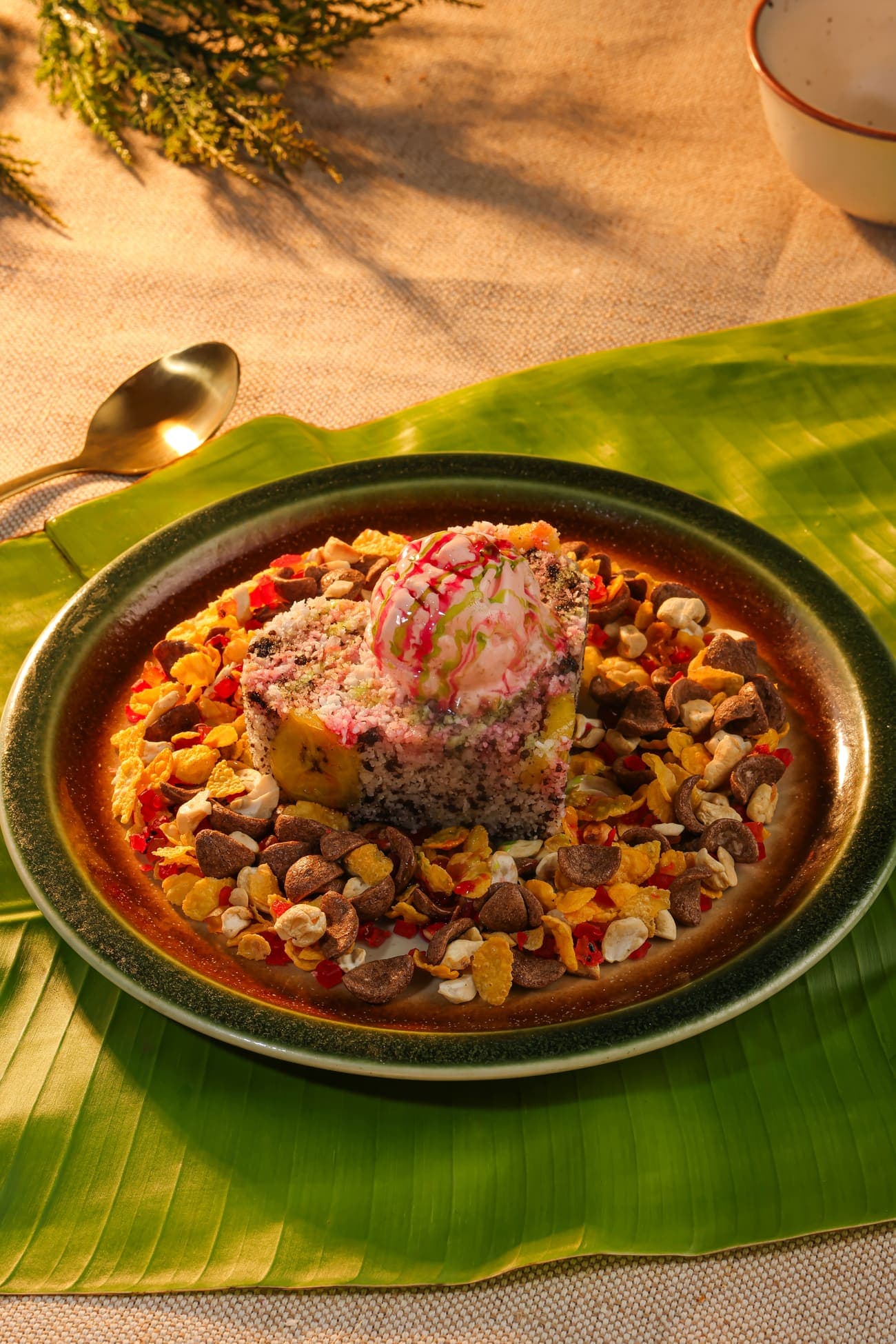
Kerala’s steamed breakfast: ground grain and fresh coconut, layered into a tall mould and cooked by steam alone. It is the dish this whole house is built around.
Puttu is one of Kerala’s best-loved breakfasts, and one of its simplest.
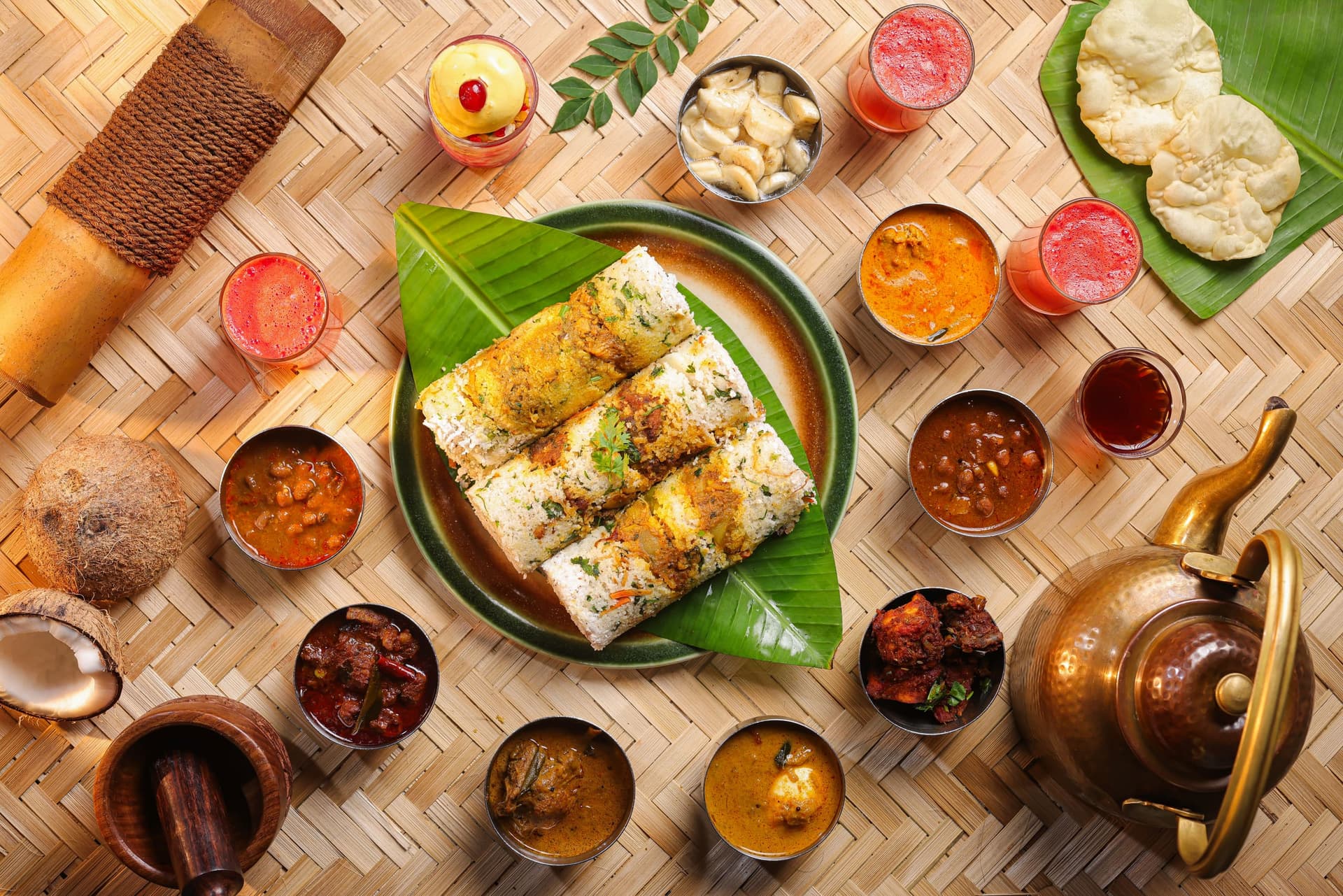
Coarsely ground rice is moistened with a little water and a pinch of salt, then packed into a tall cylindrical steamer in layers with freshly grated coconut. A few minutes over boiling water and it is done: a soft, crumbly column, turned out whole, broken up at the table and eaten with a curry, a banana or a spoonful of sugar.
There is no oil in it and nothing to ferment, so it tastes of the grain and the coconut and little else. That plainness is exactly why it takes so well to change, and why Dhe Puttu serves the classic beside combinations you will not find anywhere else.
How puttu is made
Four steps, and the steam does most of the work.
The grain
Rice, chemba, wheat, raagi, cholam or millet, coarsely ground and moistened by hand until it just holds together, dry enough to stay light, damp enough to steam through.
The layering
Packed into the puttu kutti in alternating bands: a handful of grain, a scattering of fresh coconut, and again, until the column is full.
The steam
Set over boiling water and left alone. The steam does every bit of the cooking, which is why puttu has never needed a drop of oil to be good.
The table
Turned out in one piece and eaten hot, with kadala curry, with a ripe banana, or with whatever the day happens to call for.
Rice, and the grains beside it
Rice is the classic, white or red. Kerala has always steamed its other grains the same way, and each makes a puttu of its own.
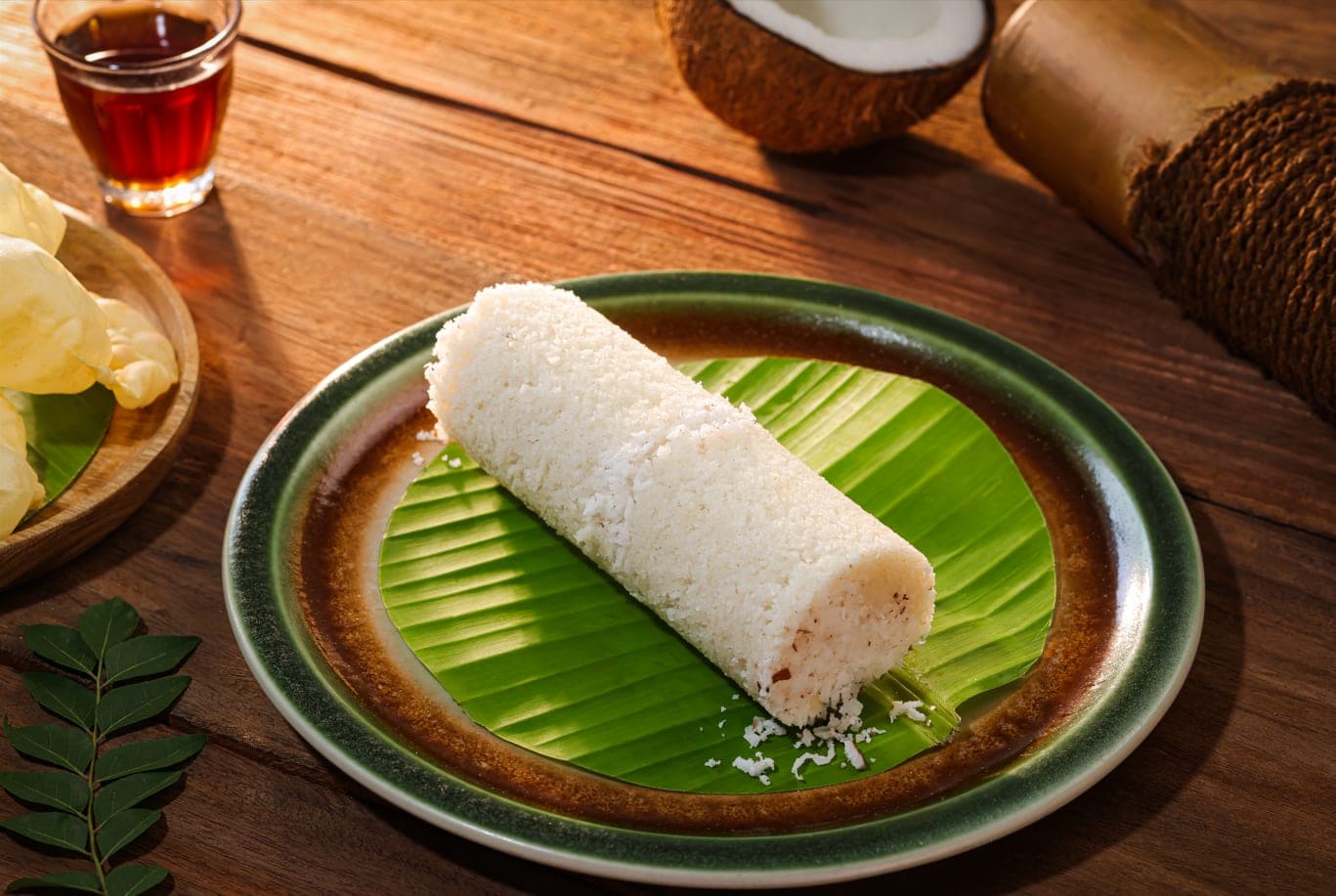
Rice
The puttu Kerala wakes up to: fine rice steamed in a column with fresh coconut, light enough to melt, ready for any curry.
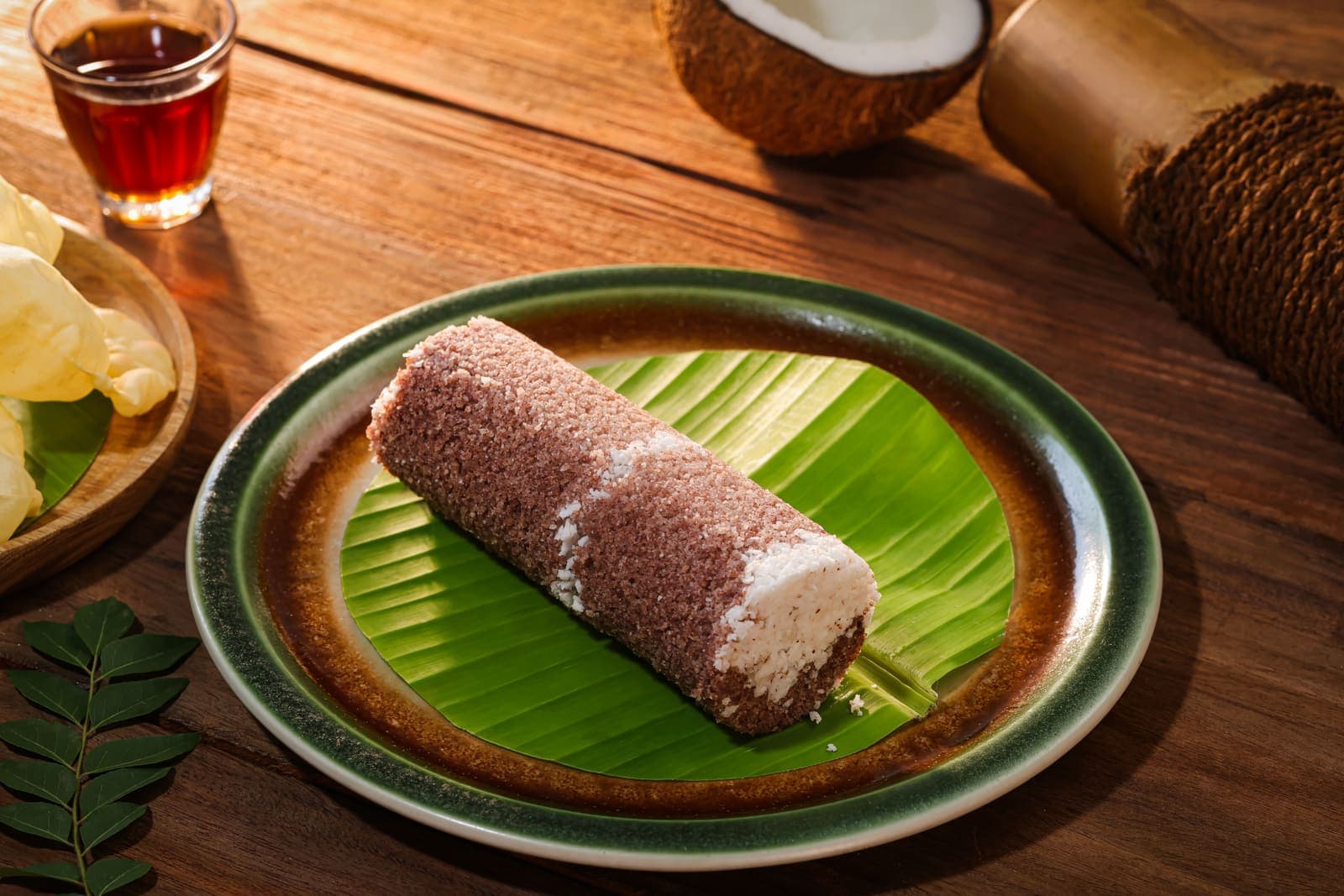
Chemba
Kerala’s red rice, ground with its bran and steamed with fresh coconut. Heartier than white rice, with a quiet nuttiness of its own.
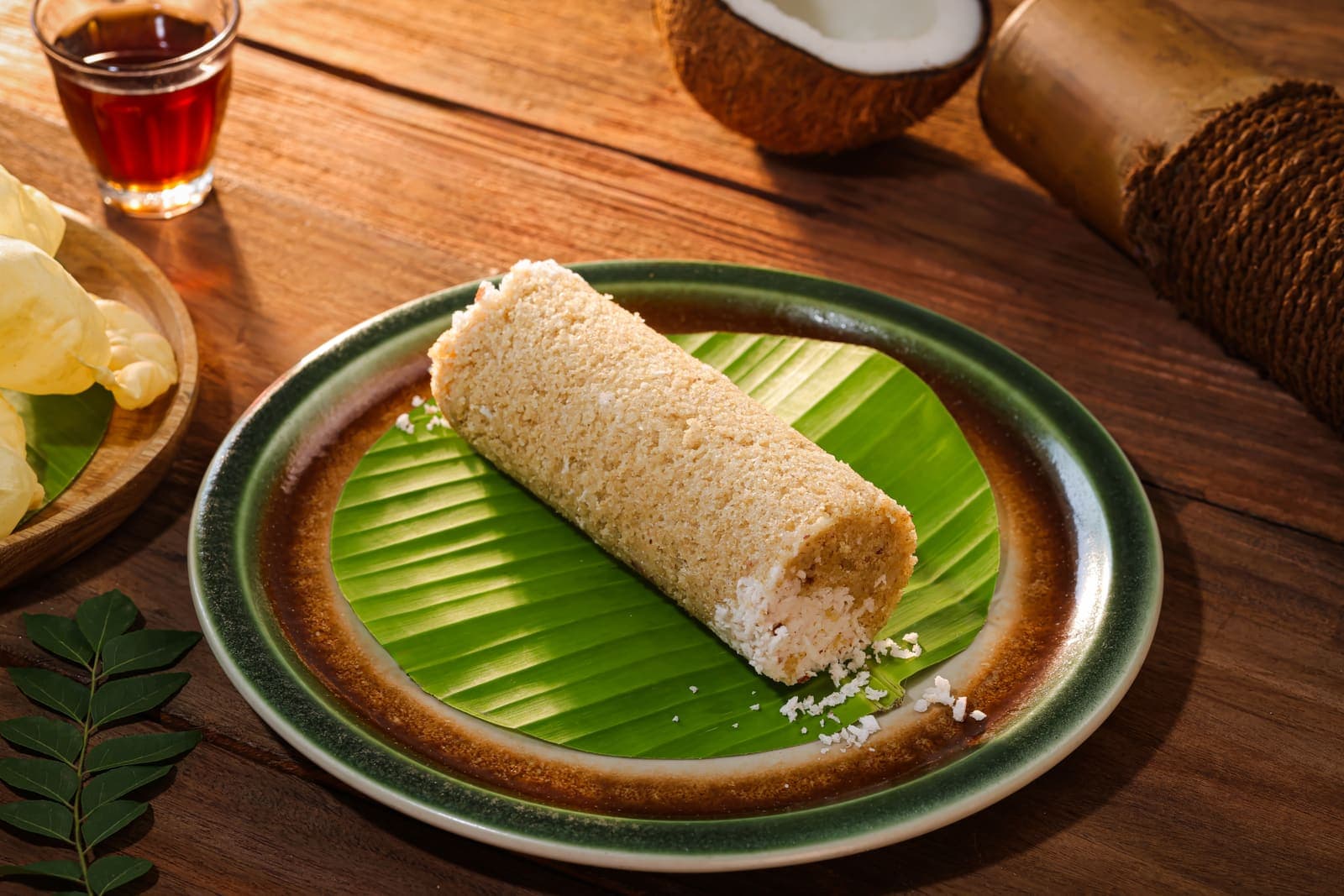
Wheat
Roasted wheat flour steamed with fresh coconut, soft and moist with a toasty warmth. The everyday puttu of many Kerala homes.
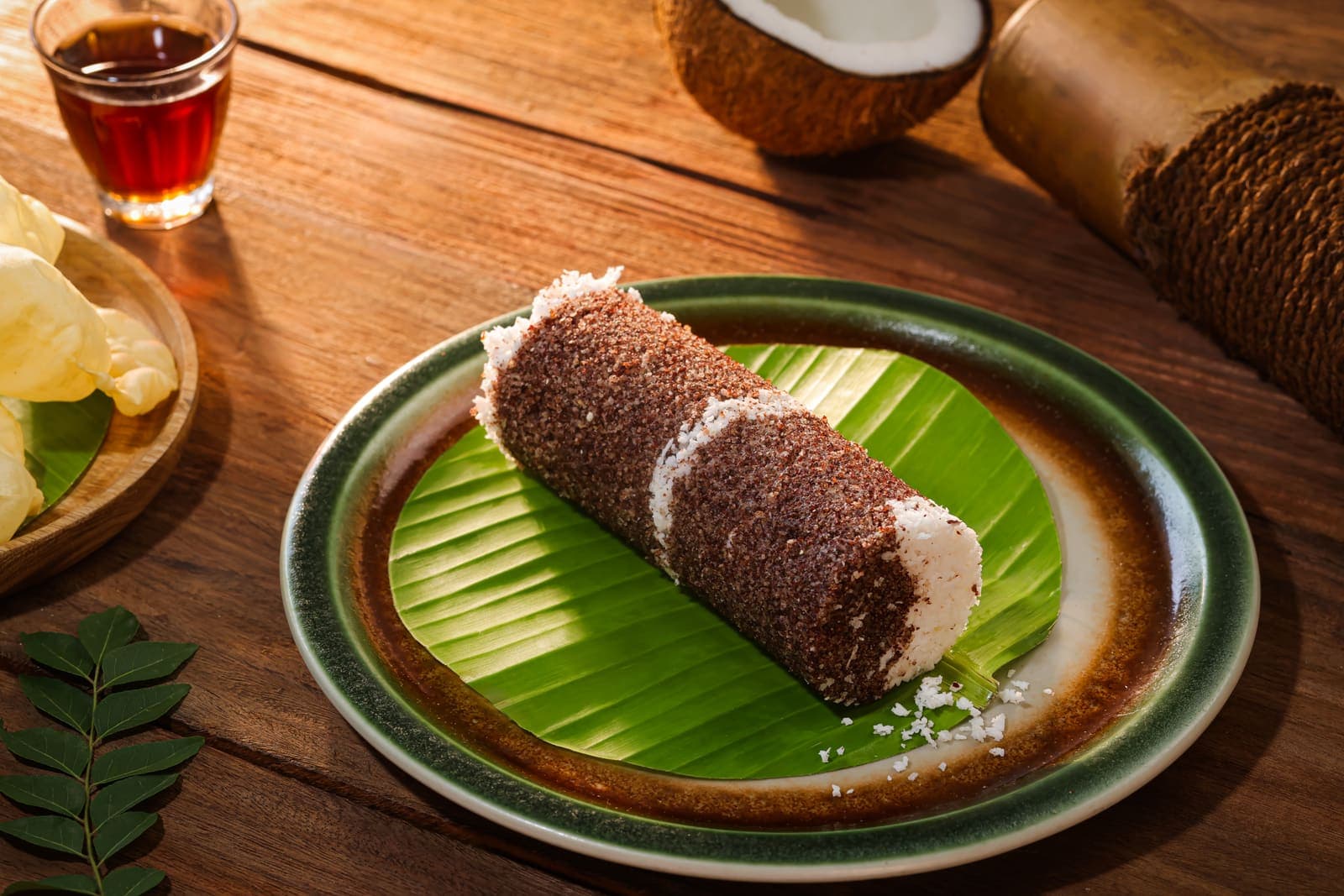
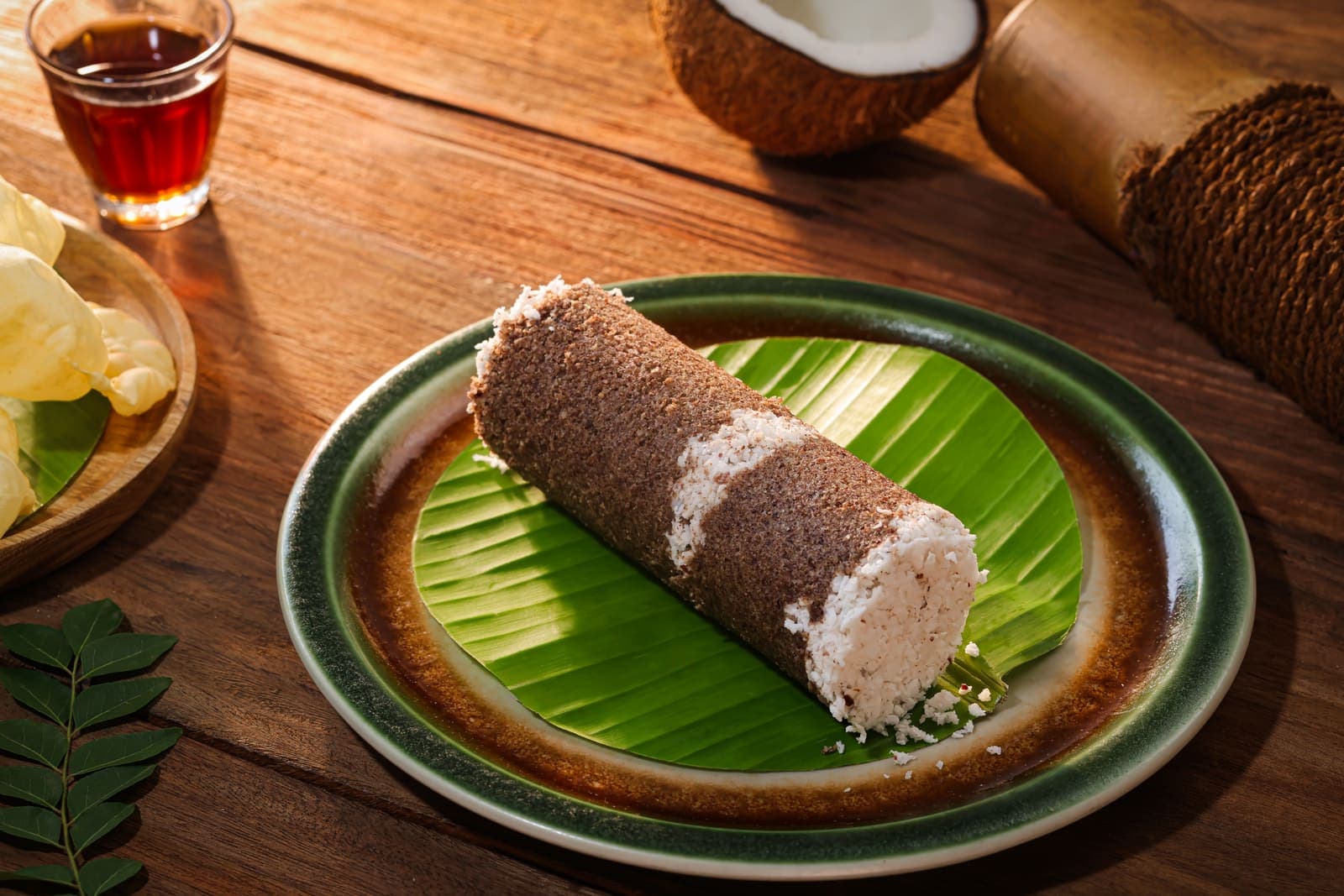
Raagi
Steamed the way it always was, dark finger millet layered with fresh coconut, dense enough to hold a ladle of curry.
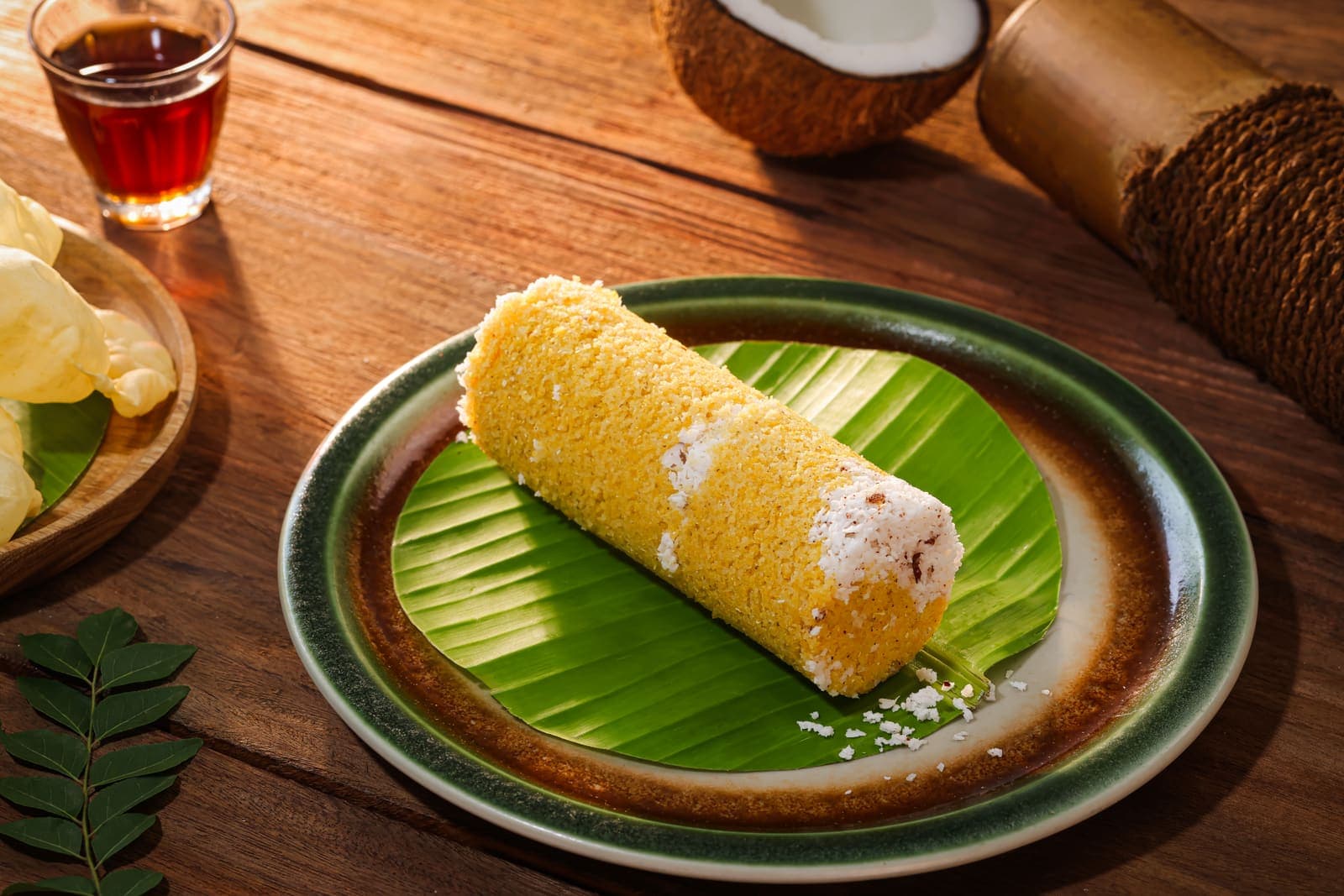
Cholam
Sun-yellow corn puttu with a mellow sweetness that carries spice beautifully, the one first-timers fall for.
Millet
Wholesome small millets, steamed soft with coconut through every layer. Humble grain, treated with respect.
What to eat with puttu
Puttu is rarely eaten on its own. What goes with it depends on the time of day and who is at the table.
- Kadala curry
- Black chickpeas simmered in a spiced coconut gravy. It is the pairing most people mean when they say puttu, and the one to start with.
- Banana and sugar
- A ripe banana mashed into the hot puttu, often with a spoonful of sugar. The sweet way to eat it, and a favourite with children.
- Payar and pappadam
- Green gram cooked soft, with a crisp pappadam crushed over the top. Plain, filling, and a breakfast on its own.
- Meat, fish and egg curries
- Chicken, beef, fish and egg curries all belong beside puttu, which soaks up a gravy like little else.
A breakfast of the south
Puttu belongs to Kerala, where it has been a breakfast staple for generations, cooked in homes across the state and served in its restaurants from the morning on. It is eaten across southern India too, in Tamil Nadu and Karnataka, and in Sri Lanka, where it is called pittu. Each place has its own grains, moulds and partners for it, but the method is the same everywhere: grain and coconut, cooked by steam.
Puttu, briefly
Is puttu vegetarian?
Plain puttu is grain, fresh coconut, salt and water, so it is both vegetarian and vegan. What is served with it, or layered into it, may not be: our menu marks every dish as veg, non-veg or egg.
Is puttu only eaten at breakfast?
It is a breakfast dish first, and in Kerala homes it mostly still is. With a curry beside it, though, it makes just as good a lunch or dinner.
Are puttu and pittu the same thing?
Yes. Pittu is the name the same steamed rice and coconut goes by in Sri Lanka.
Is puttu healthy?
It is a light dish: steamed rather than fried, with no oil and nothing fermented. Whole grains such as ragi add fibre. How healthy a plate is depends mostly on what it is served with.
How long does puttu take to steam?
Only a few minutes. Once steam is rising through the top of the mould, it is ready in about 5 to 10 minutes, depending on the grain.